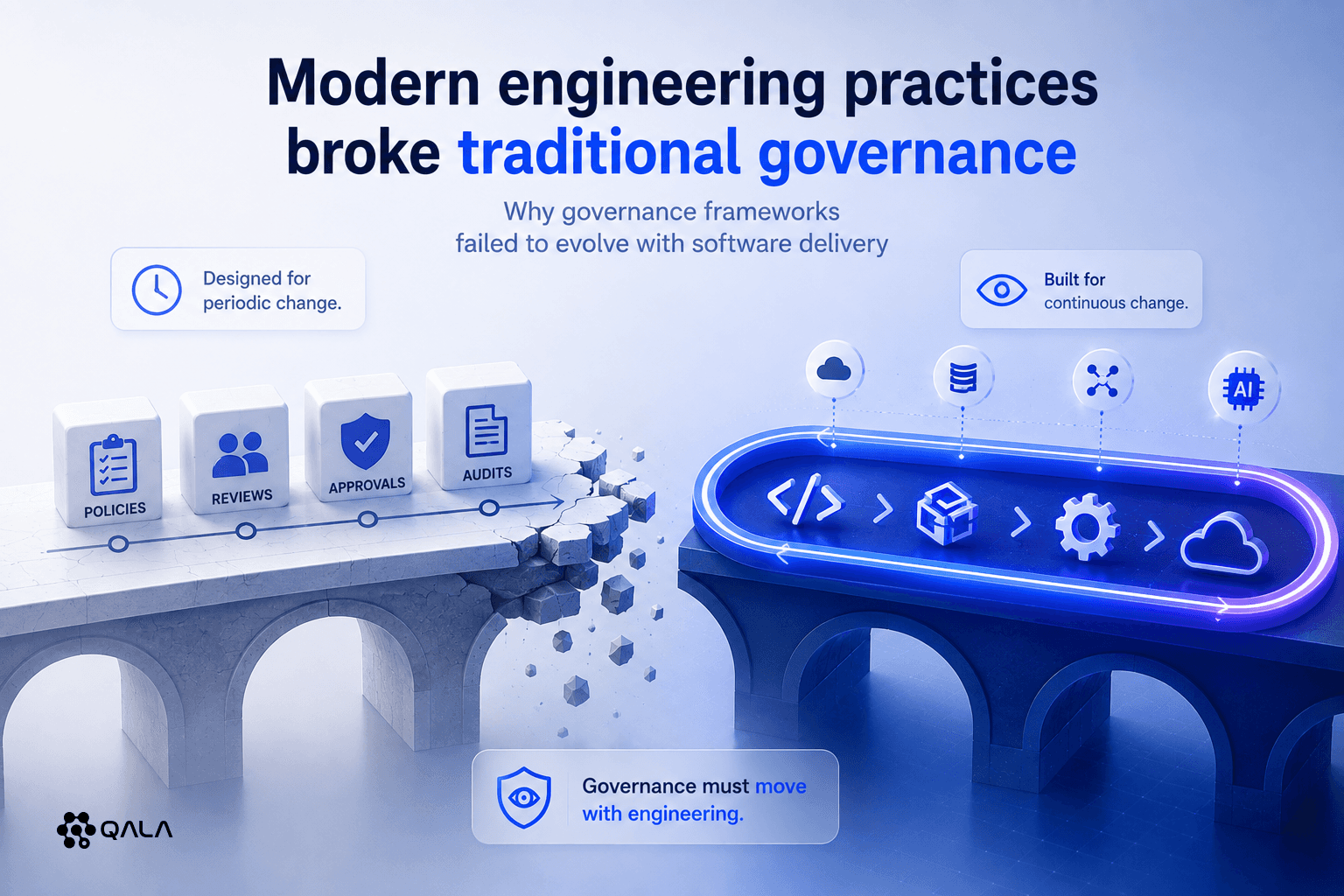
Operational visibility in the AI era
The AI era did not simply introduce new technologies - it fundamentally changed the speed, scale, and unpredictability of data movement inside organisations.
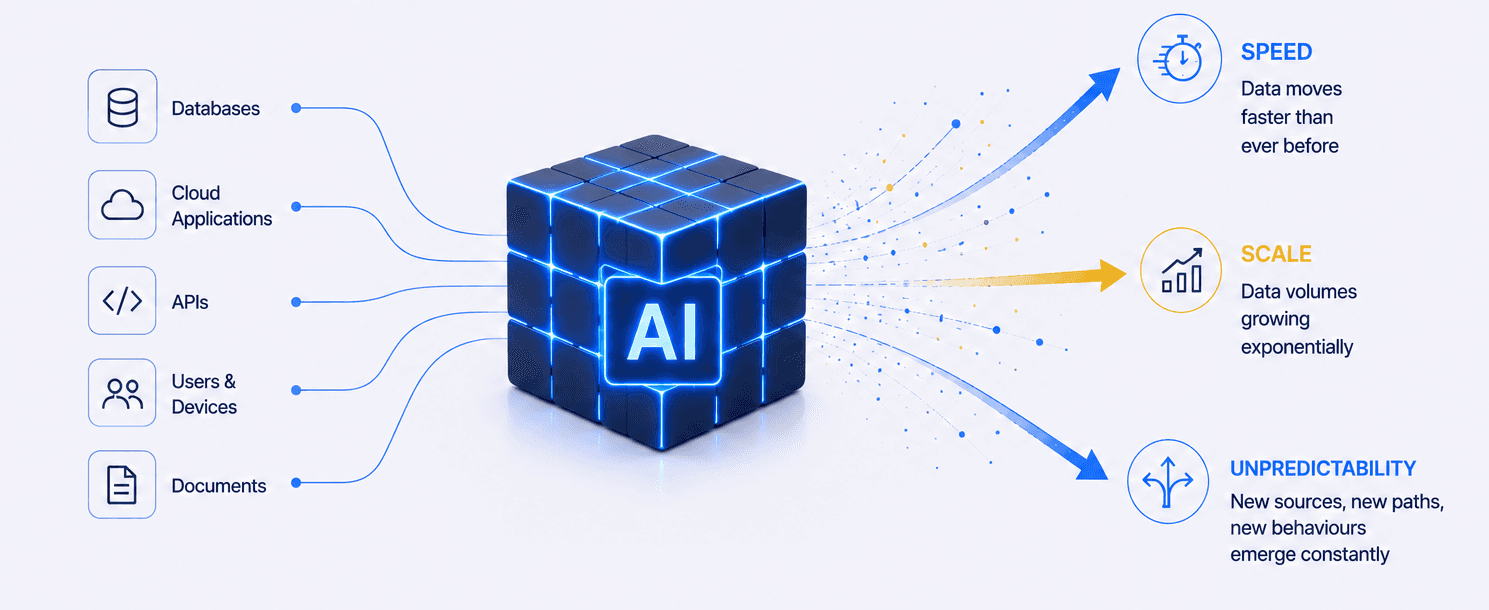
This matters particularly as most governance models, tools and teams were built for a different operational reality.
Historically, governance and security and compliance teams relied on:
centralised systems,
slower deployment cycles,
stable infrastructure,
overseeing and control of product management,
and clearly defined data boundaries.
AI disrupted all of those assumptions and requires changes, as today:
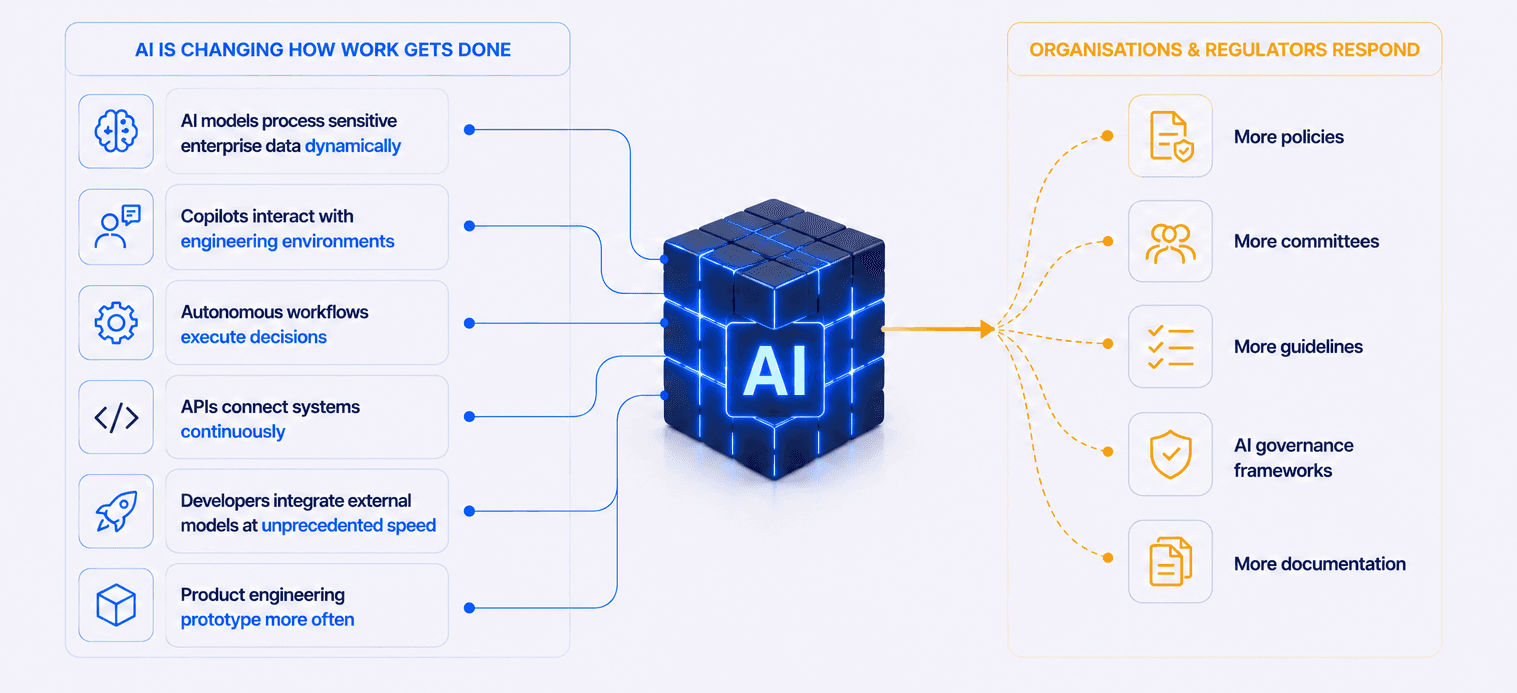
AI models process sensitive enterprise data dynamically,
copilots interact with engineering environments,
autonomous workflows execute decisions,
APIs connect systems continuously,
developers integrate external models at unprecedented speed,
and product engineering prototype more often.
Meanwhile, organisations and regulators are responding with what they know best: more policies, more committees, more guidelines. adding AI governance frameworks and documentation.
Documentation alone cannot govern operational behaviour
The challenge organisations face is no longer defining governance intent. The challenge is continuously validating whether operational systems still behave according to that intent.
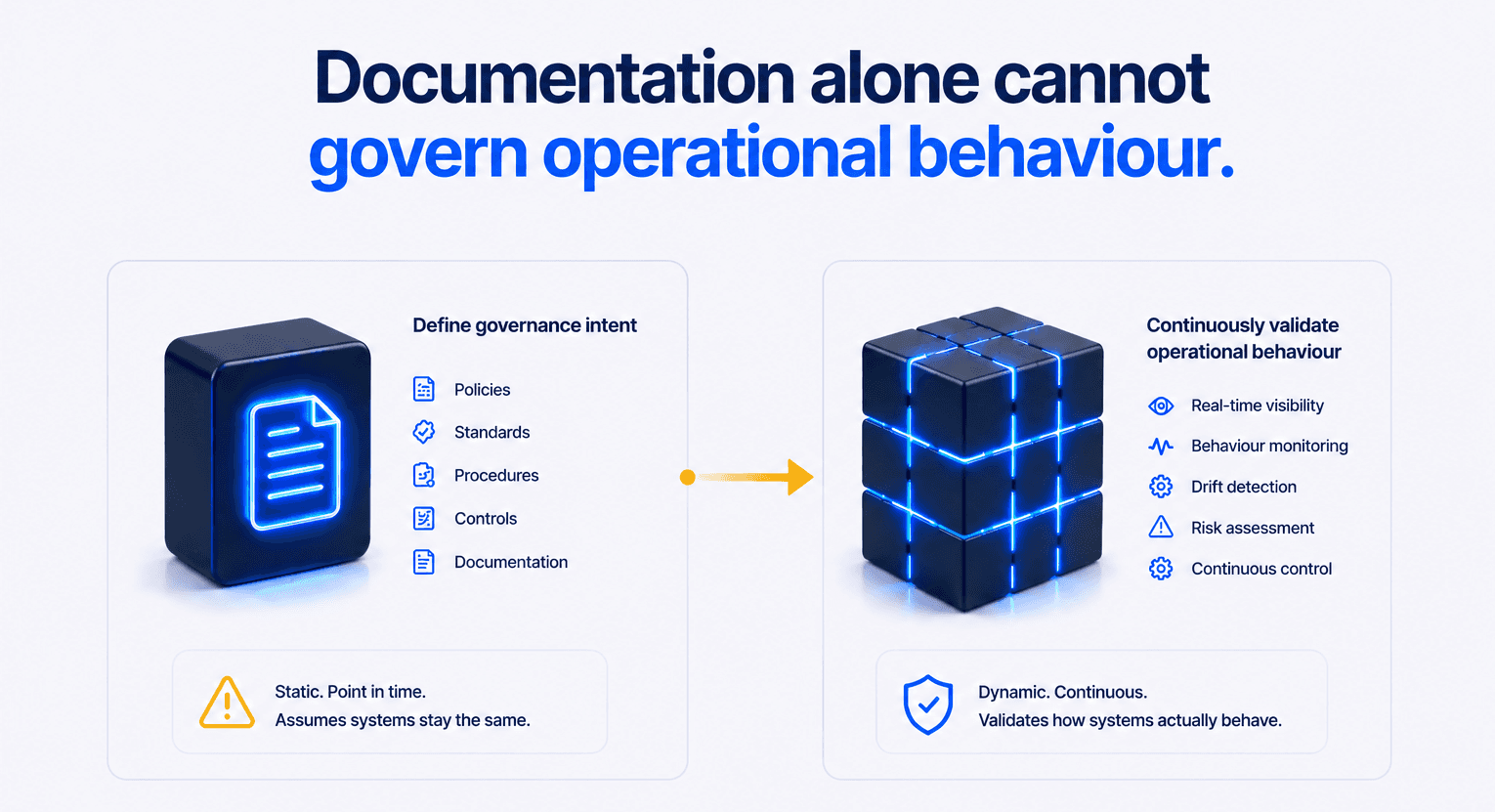
Because in modern environments and ways of working policies drift, development and implementations envolve leading to systems change on a daily basis where AI introduces entirely new execution paths.
A governance framework that updates quarterly cannot realistically govern systems that evolve hourly.
Operational visibility becomes foundational in the AI era
Organisations and their leaders need the ability to continuously observe:
where sensitive data moves,
how systems interact,
which controls remain effective,
where drift emerges,
and how AI systems influence operational behaviour.
Not retrospectively. Continuously.
The future of governance is therefore not purely procedural.
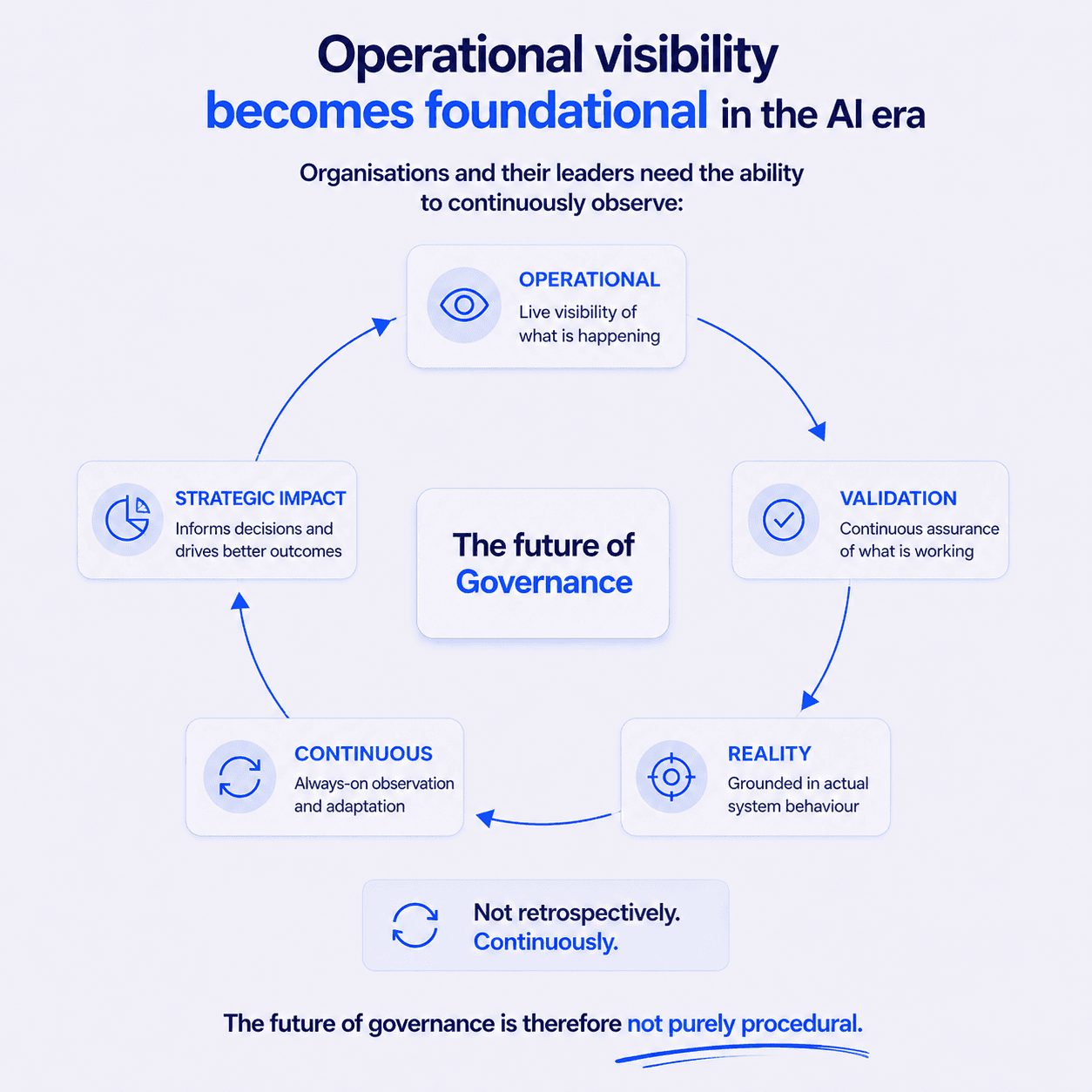
It becomes operational.
Less dependent on static attestations. More dependent on continuous evidence.
Less focused on documenting intent. More focused on validating reality.
Because AI is accelerating faster than traditional governance models can adapt. And organizations that cannot continuously observe operational behaviour will increasingly struggle to govern it.