How AI accelerated unmanaged data movement across organisations
Generative AI has changed far more than how organisations create content or improve productivity, it is changing fundamentally how enterprise data moves.
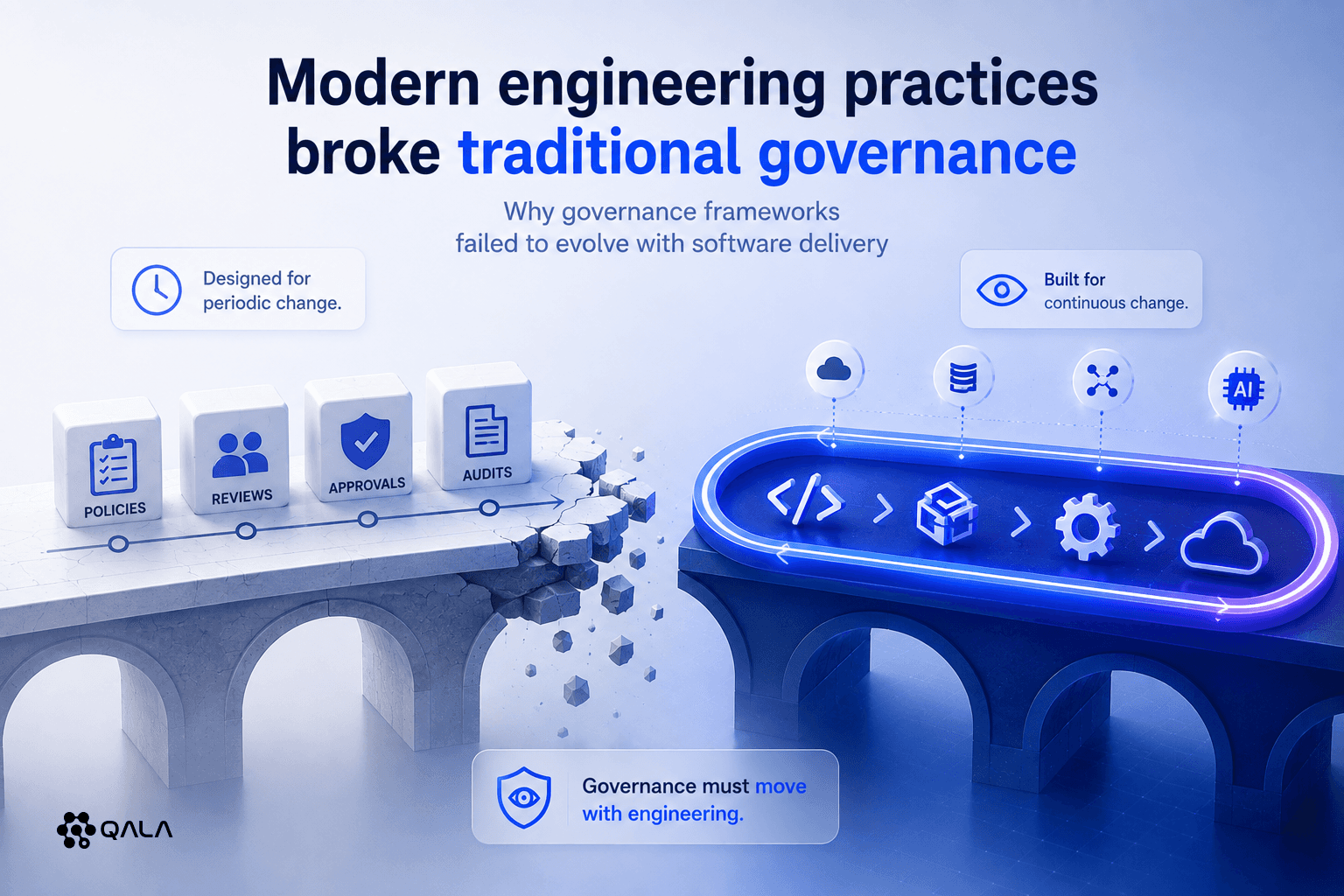
For long time, organisations designed governance frameworks around relatively predictable data flows where information moved between known systems, approved applications, trusted partners, and established business processes.
Data governance focused on defining policies, implementing of controls, and validating that sensitive information remained appropriately managed.
Generative AI has challenged and starting to disrupt that model.
Today, enterprise data moves across AI platforms, large language models, APIs, copilots, plugins, autonomous agents, and increasingly interconnected workflows that were never part of traditional governance frameworks.
The technology and ways of working evolved rapidly, while governance did not.
This growing disconnect is creating one of the biggest governance challenges and risks organisations now face.
AI has become part of everyday operations
The speed of AI adoption and usage has surprised almost every organisation, some are promoting it others are trying to slow it down.
What began as isolated experimentation has rapidly evolved into everyday business operations. Some good examples of that are very simple – employees summariseing documents using AI assistants, developers generating code through copilots, marketing teams creating content and rerpots, legal departments reviewing contracts, customer service teams drafting responses using AI or even analysts processing sensitive reports using generative models.
Many of these activities happen without dedicated governance programmes overseeing them.
Generative AI is no longer a future initiative, it is operational reality.
Every AI interaction creates a data movement
Governance has traditionally focused on where data is stored and AI shifts the conversation towards how data moves.
Every prompt submitted to an AI model represents information leaving one operational context and entering another the same way that every AI-generated response is based on data being processed, analysed, transformed, or enriched.
Plus, every new AI integration creates additional data pathways that may not previously have existed.
The important question is no longer simply - "Where is our sensitive data?"
It increasingly becomes - "Where is our sensitive data travelling?"
That distinction changes governance completely.
Most organisations cannot see these new data flows
One of the defining characteristics of Generative AI is how quickly new workflows emerge.
An employee connects an AI assistant to enterprise documents.
A team integrates an LLM into an internal application.
A developer enables AI-powered code generation.
A third-party SaaS platform quietly introduces AI features.
Individually, each decision appears relatively small.
Collectively, they transform how sensitive information moves across the organisation and the biggest challenge is that many governance teams never get to see these changes happening.
The technology evolves faster than governance processes can observe.
Policies alone cannot govern AI
Many organisations have responded by introducing AI usage policies and although they are valuable, establish expectations, define accetable use and communicate responsabilities, they do not verify behaviour.
A great example is when a policy prohibit confidential information from being entered into external AI platforms, it cannot demonstrate whether that policy is consistently followed.
Similarly, an AI governance framework may require approval before deploying new AI capabilities, yet cannot reveal how those capabilities interact with enterprise data once operational.
Documentation defines inten and governance requires visibility.
AI is exposing the current limits of governance
This challenge extends beyond AI itself, generative AI is exposing a broader weakness that has existed within governance for years. Governance assumed organisations understood how data moves and increasingly, they do not.
Current environments include cloud services, APIs, third-party platforms, SaaS applications, collaborative tools, and AI systems operating simultaneously. Generative AI has accelerated this complexity dramatically.
Data now moves faster, further, and through more systems than governance programmes were originally designed to observe.
The governance crisis is not that organisations lack controls, rather that operational reality has become significantly more dynamic than governance visibility.
Visibility becomes the foundation of AI governance
As AI adoption continues, governance challengtes and priorities are beginning to change.
Security leaders increasingly recognise that governing AI requires understanding operational behaviour rather than relying solely on documentation.
This means developing visibility into:
How sensitive data enters AI workflows
Which AI systems process enterprise information
Where AI integrations create new data flows
How third parties interact with AI-enabled processes
Whether operational behaviour aligns with governance policies
Even before discussing shadow AI.
These questions cannot be answered during an annual review, it requires continuous observation.
The future of governance is understanding data movement
Generative AI has not created the need for governance, it has exposed the limitations of existing governance models.
The organisations best prepared for the future will not simply publish stronger AI policies or introduce additional approval processes. They will build the capability to continuously understand how sensitive data moves across increasingly complex environments.
In the AI era, governance is no longer about documenting where data should go, it is about continuously understanding where it actually goes.
That shift will define the next generation of governance.