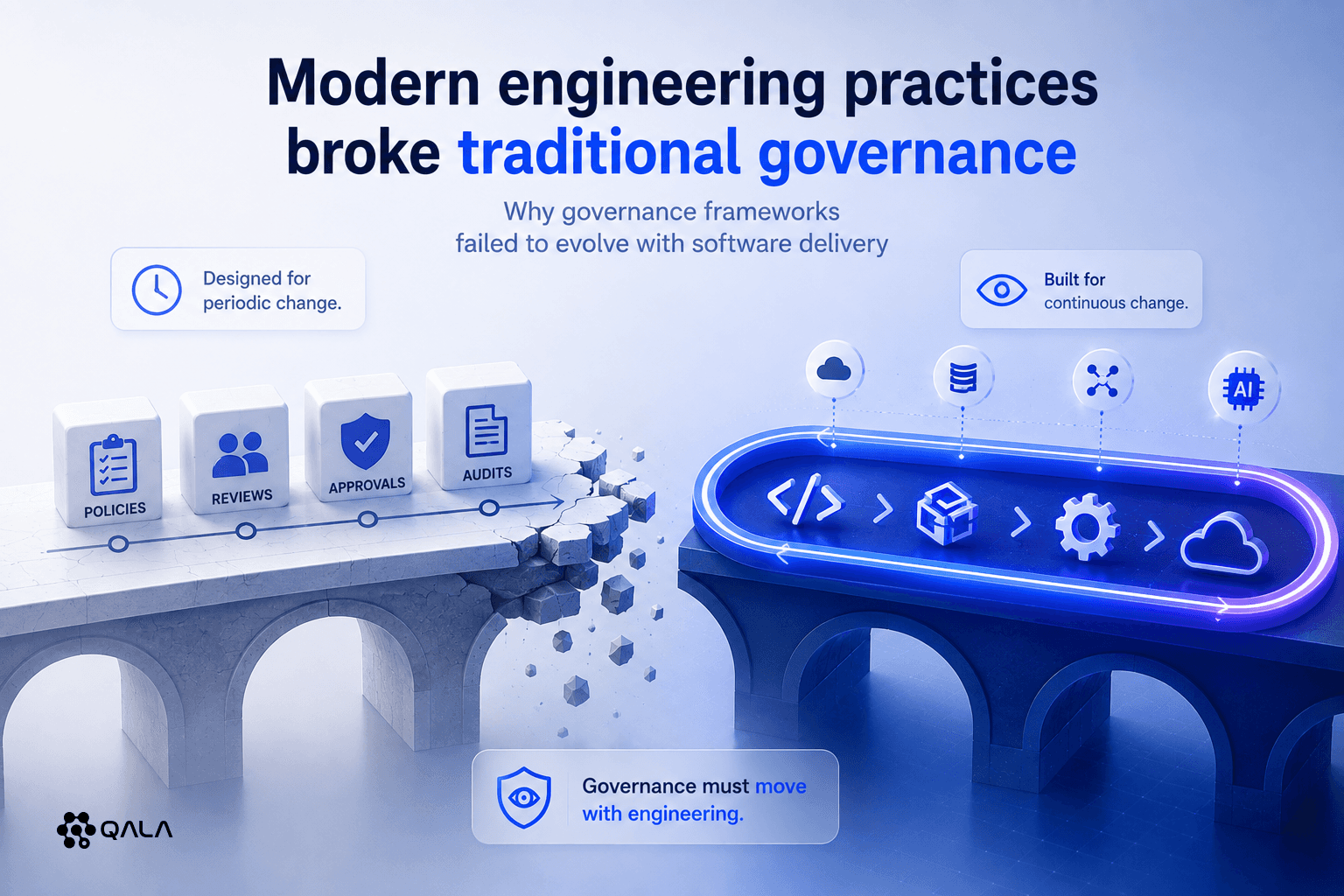
The visibility gap between security and engineering
Modern engineering transformed how organisations build systems, yet governance models did not evolve at the same speed.
This is creating one of the largest structural challenges in cybersecurity and risk management today - the visibility gap between governance teams and operational reality.
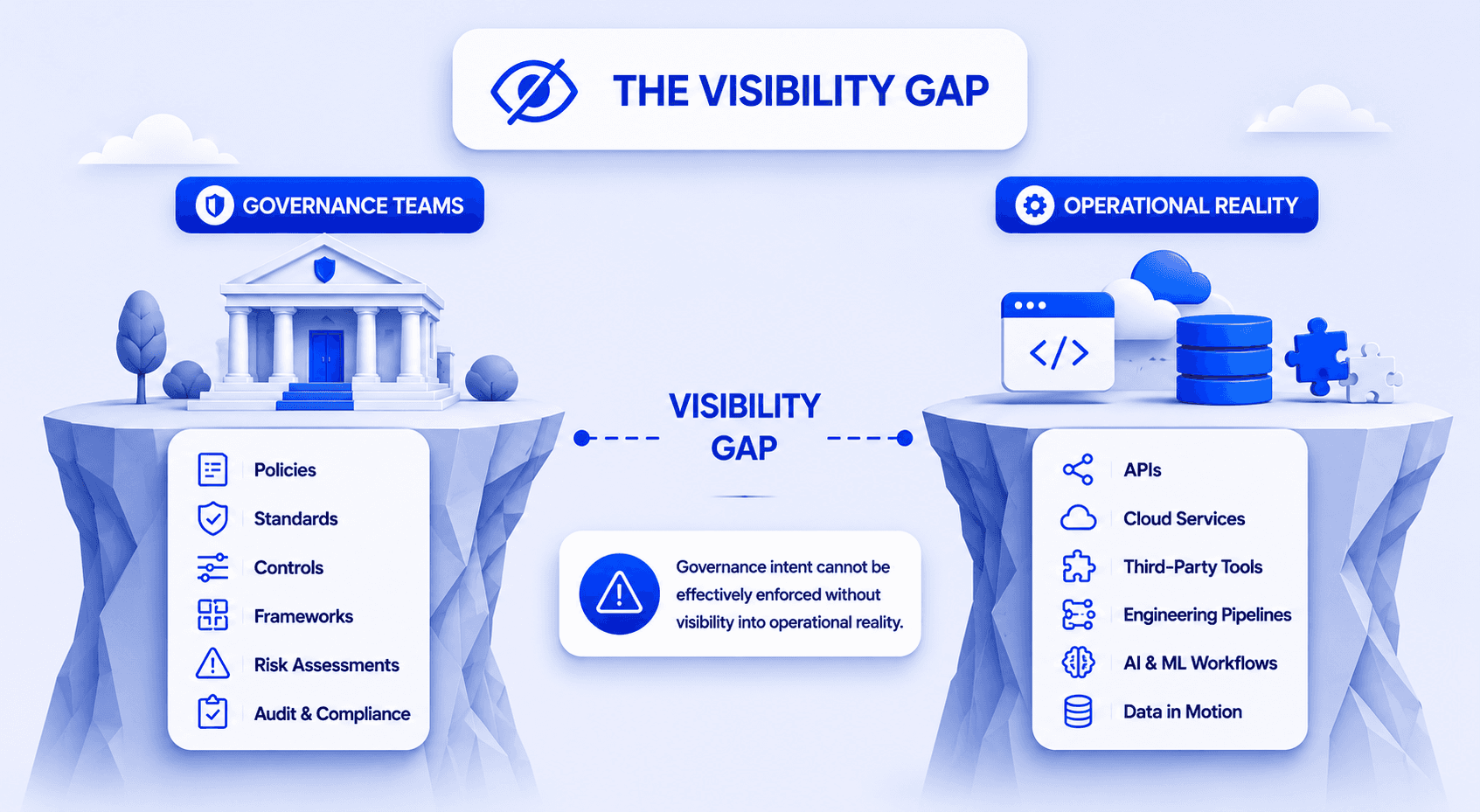
Security and governance functions operate either within a very noisy space or through abstraction layers:
policies,
architecture diagrams,
compliance attestations,
control frameworks,
periodic assessments,
and more, tools and frameworks that overwhelm their teams.
Modern ways of working and systems no longer behave in predictable, centralised ways.
Product development and applications are now more distributed across:
microservices,
cloud-native environments,
SaaS ecosystems,
third-party APIs,
CI/CD pipelines,
AI orchestration layers.
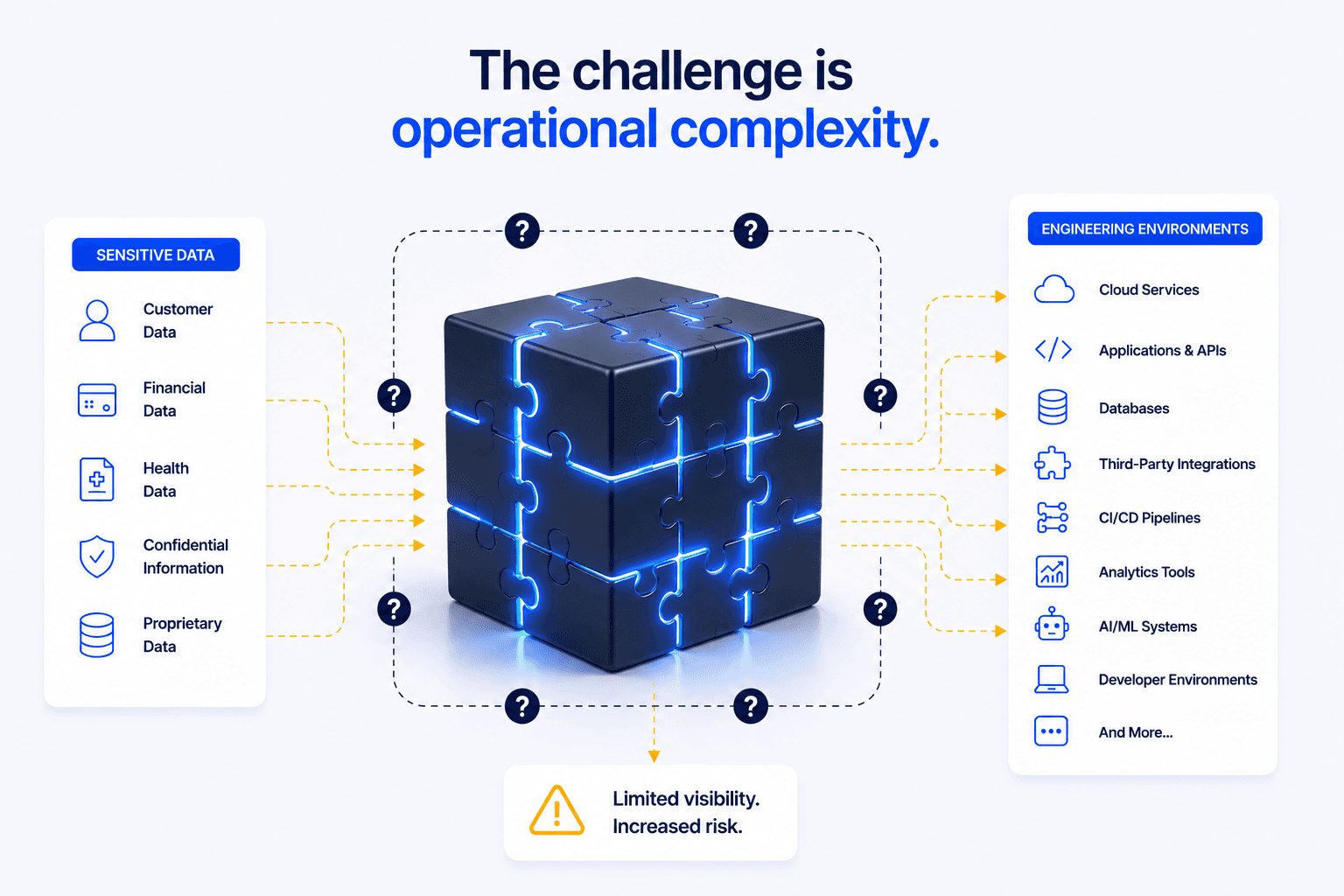
And the biggest challenges is that data itself has become highly dynamic. Moving constantly between systems, environments, vendors, and increasingly autonomous workflows.
The challenge is not necessarily malicious behaviour.
The challenge is operational complexity
Most organisations simply lack continuous visibility into how sensitive data is actually handled across engineering environments in practice. The back box problem.
As a result:
governance teams believe controls exist,
engineering teams believe implementations are compliant,
leadership assumes risk is understood.
But no one continuously validates runtime reality.
This creates blind spots that traditional governance models cannot observe.
Blind spots are where modern data risk increasingly lives
Especially in the AI era, data blind spots are where risk resides.
Generative AI is accelerating this problem dramatically as:
developers experimenting with models,
sensitive prompts crossing boundaries,
AI agents interacting with enterprise systems,
third-party inference providers handling operational data.
Governance processes built for static infrastructure cannot keep pace with machine-speed system evolution.
The future of governance
The future of governance depends on continuous operational visibility. Not as a driver to slow innovation down but to ensure organisations can innovate with speed and confidence while maintaining trust, security, and control.
Because without visibility, governance becomes theoretical.
And modern systems are far too dynamic for theoretical governance.