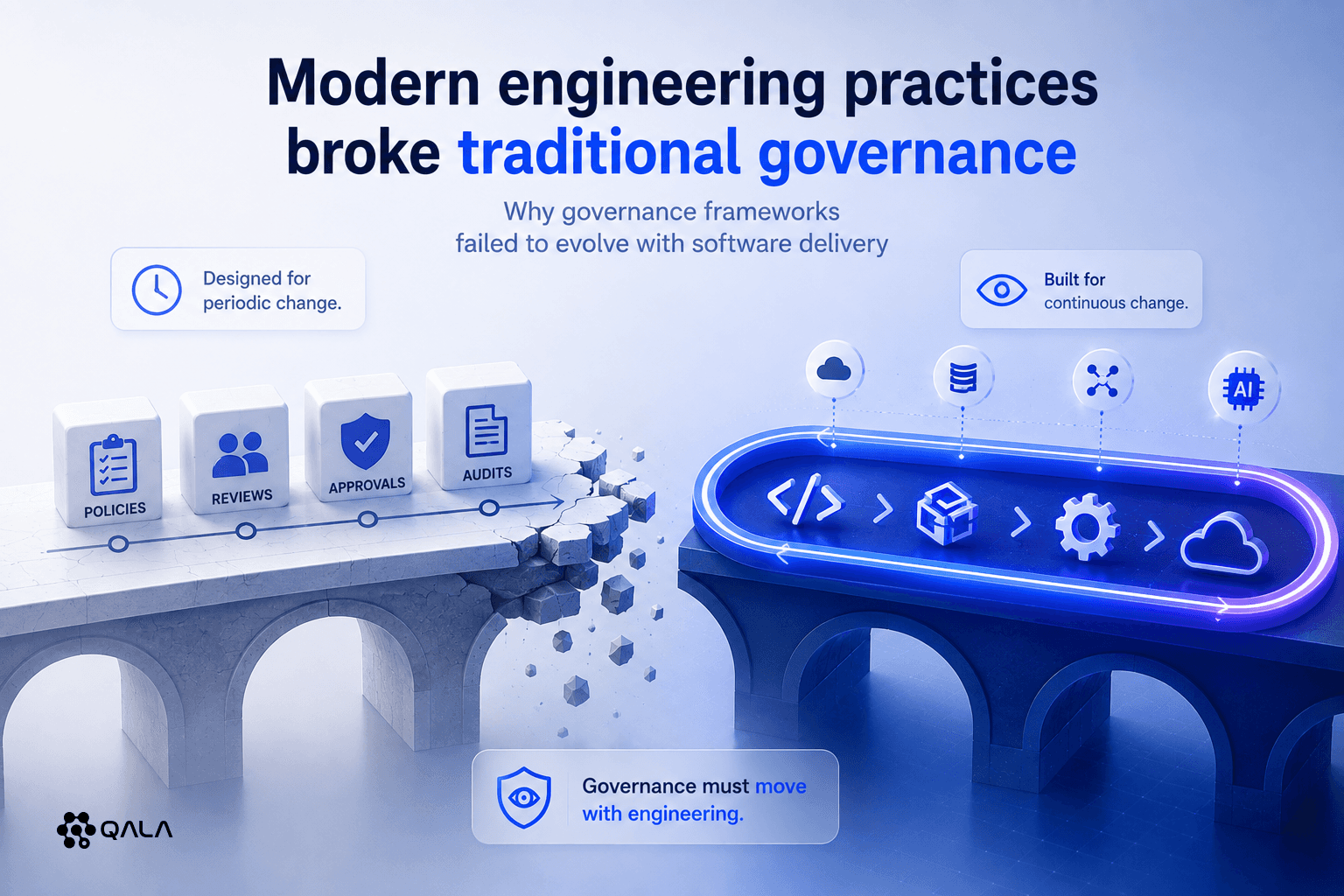
Why governance fails at runtime
How governance frameworks often stop at policy definition while engineering systems evolve independently.
Most governance programs are built around documentation
Policies. Standards. Controls. Audit evidence. Review cycles.
This is well known in Financial Services, like Banking, Payments, Insurance, where Standards and Regulations result in Policy reviews, audits and reviews.
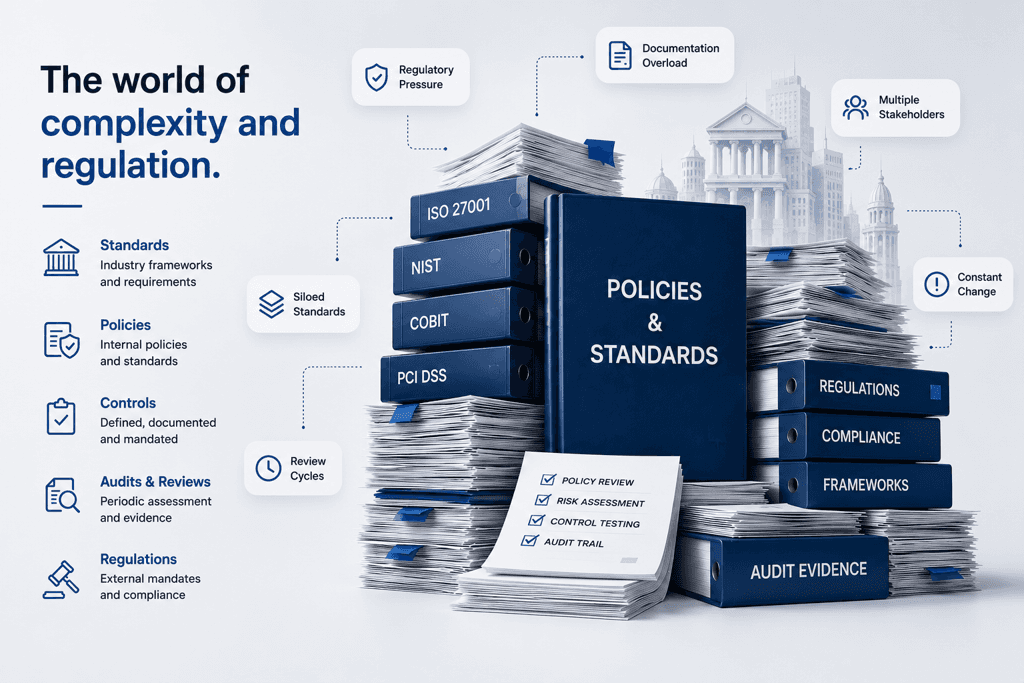
For years, that made sense as Enterprise systems were relatively stable, infrastructure changed slowly, and data movement was easier to understand and constrain. But modern organizations no longer operate in static environments and most are taking current technology opportunities to become more modern by running transformation programs.
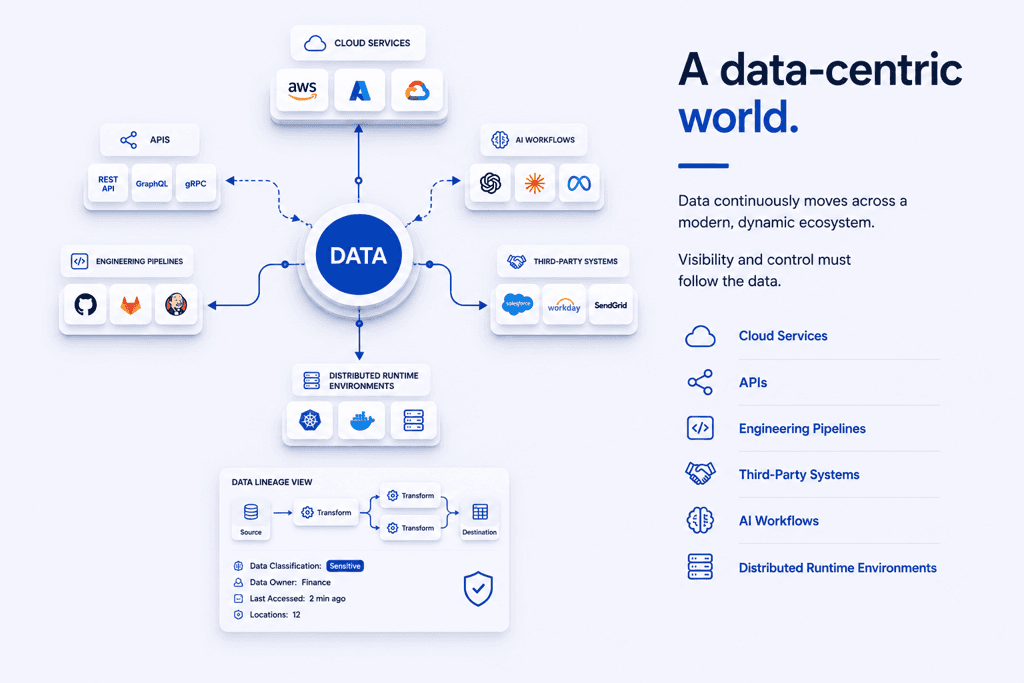
Where data continuously moves dynamically across:
cloud services,
APIs,
engineering pipelines,
third-party systems,
AI workflows,
and distributed runtime environments.
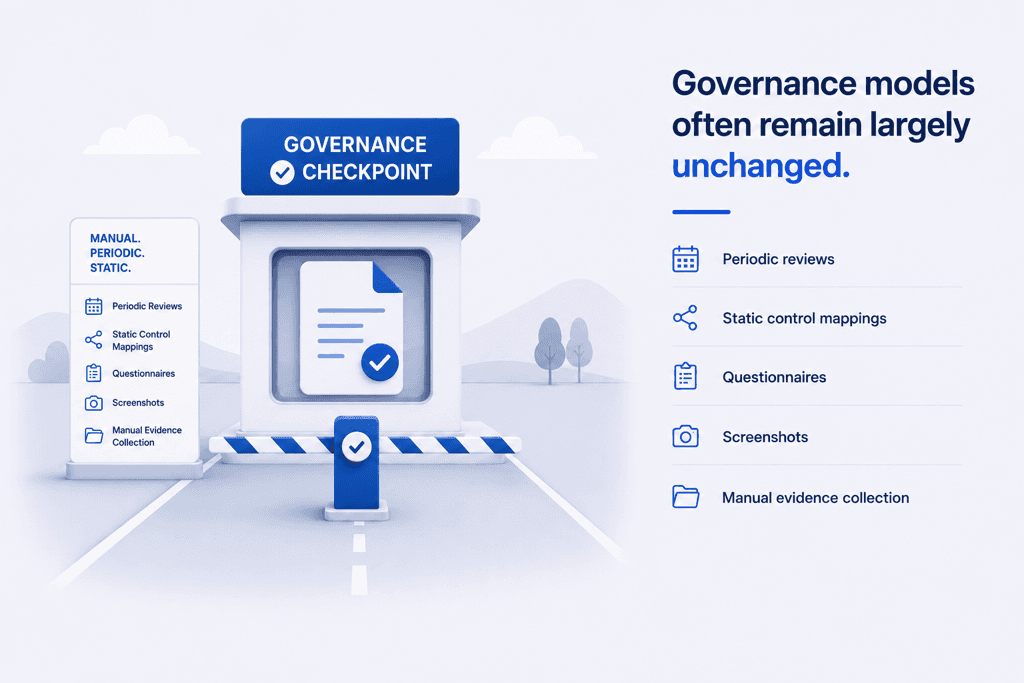
Meanwhile, governance models often remain largely unchanged:
periodic reviews,
static control mappings,
questionnaires,
screenshots,
and manual evidence collection.
A dangerous operational gap
This creates a dangerous operational gap. As governance intent and runtime reality increasingly drift apart.
A policy may state that sensitive data should never leave a controlled environment. Yet engineering teams may unintentionally expose that data through logging systems, analytics tools, development environments, AI copilots, or third-party integrations - without governance teams ever seeing it happen.
And almost all times, organizations do not lack governance frameworks. The problem is that most governance frameworks were never designed to continuously observe operational behaviour. And in modern systems, behaviour changes constantly.
Infrastructure evolves daily. APIs are added continuously. AI systems introduce entirely new data paths. Engineering velocity accelerates faster than traditional governance processes can keep pace with.
This is why many organizations discover governance failures only during:
audits,
incidents,
regulatory reviews,
or post-breach investigations.
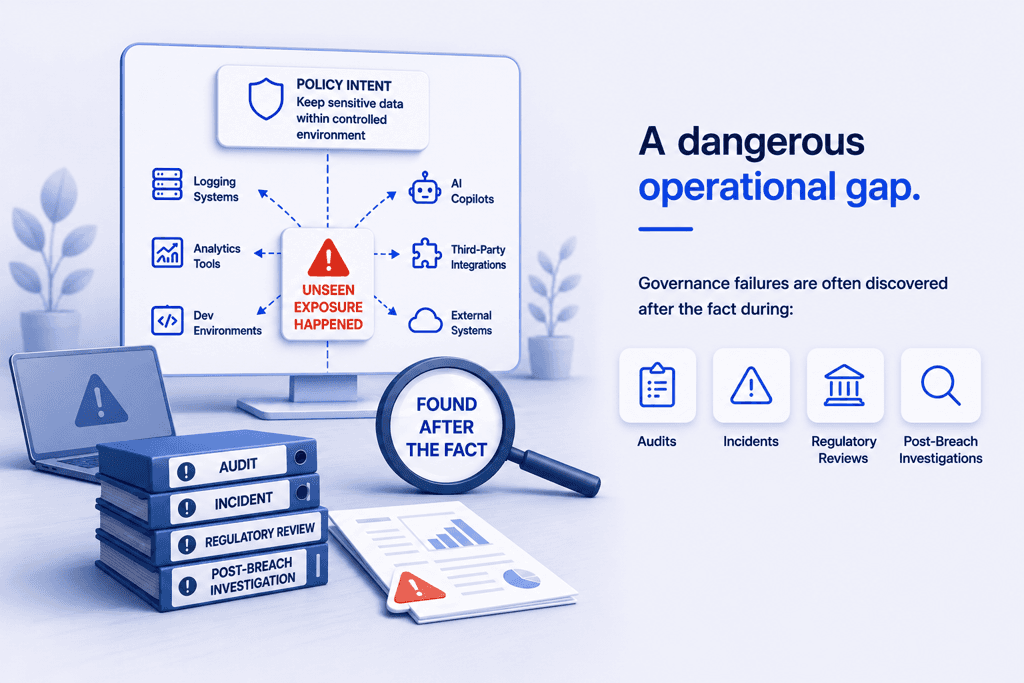
By then, the drift has already happened.
The future of Governance
The next generation of governance will not be defined by better documentation.
It will be defined by operational visibility.
Governance must evolve from static definition to continuous verification:
continuously reconciling policy intent,
engineering implementation,
and runtime behaviour.
Because in modern environments, governance that cannot observe runtime reality becomes governance based on assumptions.
And assumptions are no longer sufficient.